




On 13 November 2025, the REALCHEM project hosted its first online stakeholder workshop, bringing together experts from across industry, research, and policy to discuss the future of hard-to-electrify transport sectors. The workshop was organised with contributions from project partners including Tampere University, IVL Swedish Environmental Research Institute, VTT Technical Research Centre of Finland and POLIS Network.
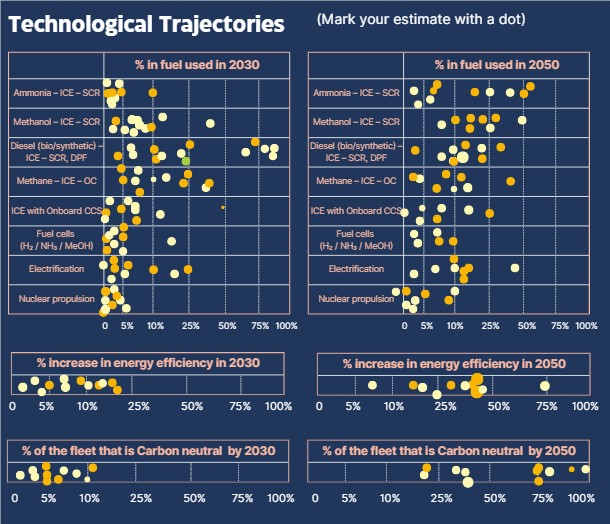
The session focused on the researched key sectors (aviation, shipping, and heavy-duty road transport and non-road mobile machinery) where transitioning to low-carbon solutions remains particularly challenging. Through a series of expert presentations and interactive break-out discussions, participants explored technological trajectories, mitigation strategies, and stakeholder expectations for future technology packages.
Across all sectors, discussions highlighted that no single technology will be sufficient to achieve decarbonisation. Instead, a combination of solutions, including sustainable fuels, electrification, and alternative propulsion systems, will be required. Stakeholders emphasised that while progress by 2030 is expected to be gradual, more significant transformations are anticipated by 2050, driven by advancements in technology, stronger regulatory frameworks, and increased investment.
In the shipping sector, participants underlined the importance of technology maturity, regulatory support, and operational feasibility, while also pointing to cost and safety as key concerns. For heavy-duty transport and machinery, drop-in fuels are expected to dominate in the short term, with electrification gaining substantial ground in the longer term. In aviation, sustainable aviation fuels (SAF) were identified as the primary decarbonisation pathway, although challenges related to cost, supply, and infrastructure remain.
A strong message across all discussions was the need for robust scientific data on emissions from low-carbon fuels, alongside clearer regulatory guidance and closer collaboration between stakeholders and policymakers. Participants also highlighted the importance of addressing both climate and air quality impacts, ensuring that future solutions deliver comprehensive environmental benefits.
The insights gathered during the workshop will play a crucial role in shaping REALCHEM’s future work, including the development of technology pathways, emission modelling scenarios, and policy-relevant recommendations aimed at supporting cleaner and more sustainable transport systems.
Read the written report here: REALCHEM -1st Stakeholder Workshop Outcomes