


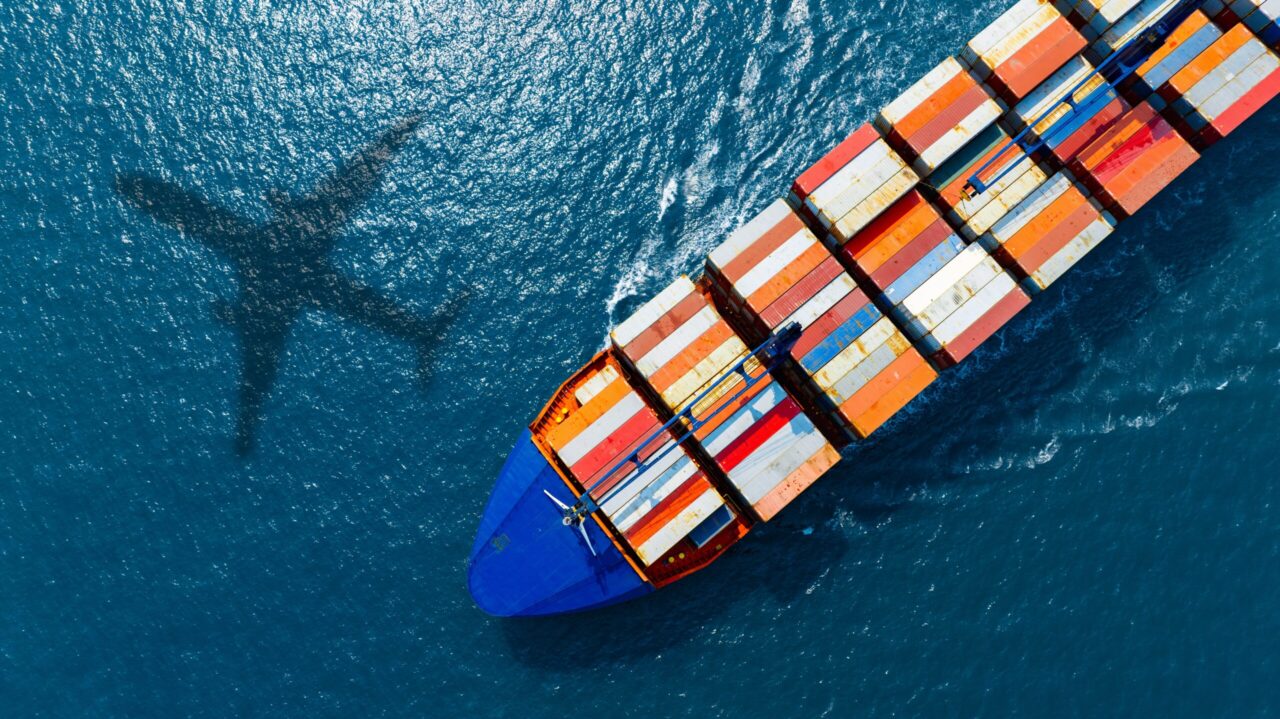

If you are asking this question yourself, we can help you! As a research and innovation project, REALCHEM focuses on enabling cleaner and more climate-friendly transport in sectors where electrification remains challenging. These include aviation, maritime shipping, heavy-duty road transport, and non-road mobile machinery (NRMM) such as construction and agricultural equipment.
These sectors are essential to the global economy but being hard-to-electrify, they still rely heavily on combustion engines, making them difficult to decarbonise. REALCHEM addresses this challenge by investigating how low-carbon fuels perform in real-world conditions and how they affect emissions, air quality, human health, and the climate.
What REALCHEM aims to achieve
REALCHEM combines experimental research, real-world measurements, and advanced modelling to understand and quantify emissions across different fuels and technologies. Its work is structured around several core activities:
– Emission measurements and experiments: conducting laboratory and real-world tests across all four sectors to analyse emissions from low-carbon and conventional fuels under realistic operating conditions
– Data integration and database development: bringing together existing knowledge and newly generated data into a comprehensive emission database for low-carbon fuels
– Air quality and climate modelling: assessing how emissions affect air quality, climate, and human exposure at local, regional, and global scales
– Health impact assessment: evaluating how changes in emissions influence human health and environmental outcomes
– Technology evaluation and guidance: identifying the most effective fuel and technology combinations and providing recommendations for cleaner transport solutions
REALCHEM sector focus
– Aviation: emissions from aircraft engines using alternative fuels, including their impact at altitude and their contribution to climate effects and air pollution.
– Shipping: emissions from ship and vessel engines, a major source of pollution in coastal and port areas, and evaluates cleaner fuel options for maritime transport.
– Heavy-duty road transport: emissions from trucks and other heavy-duty vehicles, where electrification is progressing slowly and low-carbon fuels are expected to play a key role.
– Non-road mobile machinery: this includes construction, agricultural, and industrial equipment, which often operate under demanding conditions and are significant but less regulated emission sources.
The REALCHEM approach
These activities are organised into coordinated work packages that ensure a strong link between measurements, modelling, and real-world application. The project moves from data collection and experimental work, through analysis and impact assessment, to the development of practical guidance and tools for relevant stakeholders, including emission factors databases and policy recommendations. This integrated approach ensures that results are both scientifically robust and directly relevant for industry and policy.
By generating high-quality evidence and actionable insights, REALCHEM supports the development of cleaner technologies tailored to each sector. It helps industry, policymakers, and technology developers reduce harmful emissions while advancing decarbonisation.
Ultimately, the project contributes to Europe’s climate goals and the ambition of achieving zero pollution by 2050, ensuring that the transition to low-carbon fuels delivers real benefits for both the environment and public health.